On April 27, 2026, Cooper Flagg was named Rookie of the Year with 412 points, to Kon Knueppel’s 386. On June 23, at Barclays Center, AJ Dybantsa went first overall to Washington. In two months, the NBA crowned the best player of one class and named the most promising of the next.
Those two verdicts answer short-term questions: who was best this season, who looks best today. What interests us is further away: in ten years, when these players have signed their second or third contracts, which of them will really have changed a franchise’s trajectory?
- 6 of 14players in the 2023 re-draft had been picked outside the top 10
- 89Cooper Flagg’s projected index at ten years, the highest in both classes
- ±18Darryn Peterson’s range at ten years, the widest
What the 2023 class taught us
Before projecting anyone, we looked back. In September 2026, NBA Draft on SI redid the 2023 lottery with three years of hindsight. The chart below links the original draft order to that new ranking.
Three lessons came out of it, and they directly shaped our method.
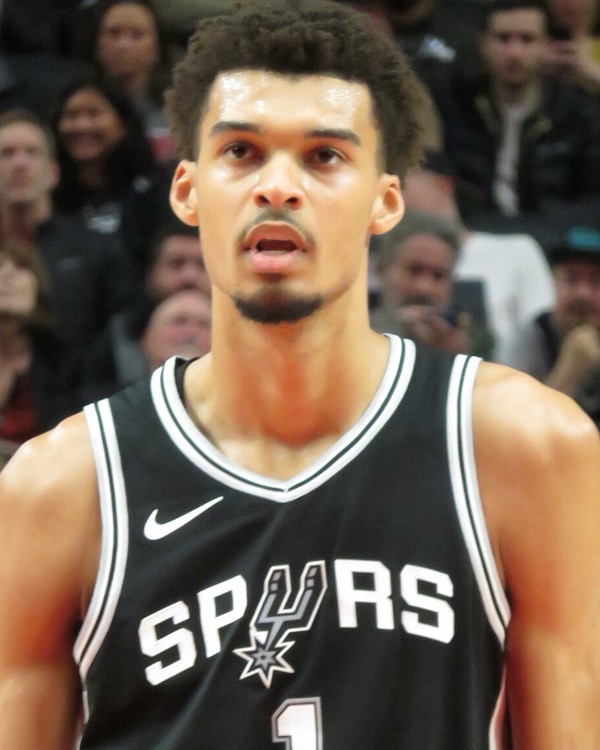
The obvious No. 1 stayed obvious. Victor Wembanyama was the only player everyone was sure about. Three years later, he was the first unanimous Defensive Player of the Year and finished third in MVP voting. When the consensus is overwhelming, it’s often right.
The middle of the draft is misjudged. Six of the fourteen players in the re-draft had been picked outside the top 10, including Keyonte George (16th, 23.6 points per game) and Toumani Camara, taken in the second round at 52nd. Teams overrate raw potential and underrate players who improve fast.
Potential without production is a gamble. Scoot Henderson, the third pick, is fourteenth in the re-draft. Bilal Coulibaly, seventh, is thirteenth. Both had appealing physical and technical profiles, but light production at the time of the draft. Hence the weight we give production and growth, and the range we add to every projection.
The method
Each player gets four grades out of 100. They are editorial judgments, and we own them as such:
- Production: what he already produces, or will produce in his first NBA season for the 2026 class.
- Growth: what he gained from one month to the next, from one season to the next.
- Profile: age, size, physique, tools. What can’t be taught and ages well.
- Context: role, minutes, coaching and the stability of the franchise.
The impact index is then calculated mechanically, with weights that change with the horizon. At one year, what a player can already do matters most. At ten years, his profile dominates, because that’s what remains once the context has changed.
| Criterion | 1 year | 5 years | 10 years |
|---|---|---|---|
| Production | 55% | 25% | 15% |
| Growth | 10% | 25% | 25% |
| Profile | 10% | 30% | 50% |
| Context | 25% | 20% | 10% |
Each index comes with a range. It widens with the horizon (±4 points at one year, ±9 at five, ±14 at ten for a player of average risk) and with the player’s own risk: injuries, an unusual profile, no NBA games yet. That’s the Scoot Henderson lesson. An index without a range suggests a precision we don’t have.
So we don’t choose the result: we choose the grades, and the calculation does the rest. If you disagree with a ranking, it’s a grade you need to challenge. Complaints welcome, insults not. They are all visible on each player’s card.
bar: projected index · light zone: uncertainty range
The 2025 class, one year in
Cooper Flagg: 85, then 89
Some numbers sum up a season. For Flagg, it’s this one: he’s the second rookie since 1973-74 to lead his team in points, rebounds, assists and steals. The first was Michael Jordan. The rest follows: 21.0 points, 6.7 rebounds, 4.5 assists, and 51 points against Orlando in April, making him the youngest player in history to score 50.
He also has the narrowest range in the table (±8 at ten years). His only real weak point is the Mavericks’ record, 26 wins and 56 losses. But he carried a whole team at 19. What he still has to learn is how to win.
Dylan Harper: 73, then 84
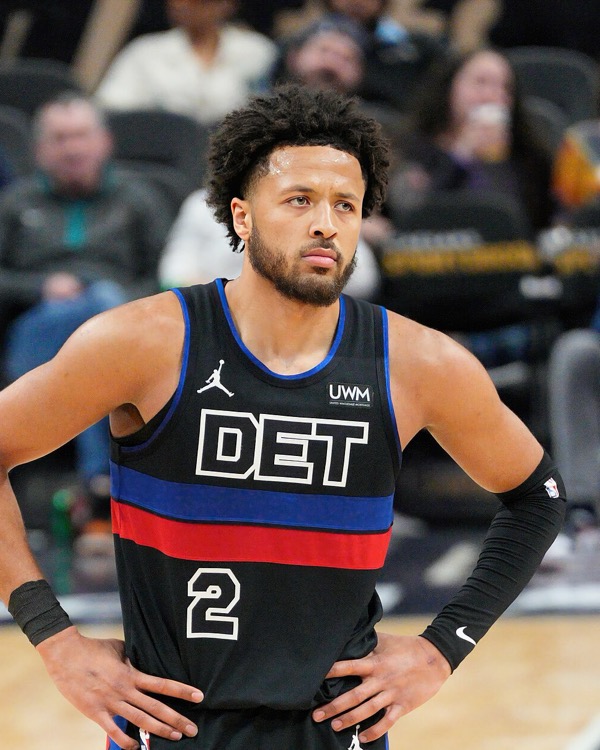
The boldest call in these rankings. On paper, his season was modest: 11.8 points in 22.6 minutes, behind De’Aaron Fox and Stephon Castle. But the Spurs reached the Finals, and he averaged 18 points there in a 4-1 series loss to the Knicks. His context is the best in the class, with Wembanyama next to him and a franchise that knows how to develop players. At ten years, we see him just behind Flagg. And in full transparency: Harper ahead of Dybantsa, I’d sign that every day. I’m a fan, I own it, and the grades are there so you can prove me wrong.
Kon Knueppel: 81, then 75
The only player in the 2025 class whose index goes down over time, and that’s not a criticism. His 273 threes, a rookie record and the most in the league, make him one of the most immediately useful players around. The Hornets went from 19 to 44 wins. But his impact rests on one weapon, shooting, which ages well but doesn’t expand much. The others will catch up by improving. He’ll be very good for a very long time, without necessarily becoming a franchise’s center of gravity.
VJ Edgecombe: 74, then 76
A starter from night one in Philadelphia, 35 minutes a game, 16.0 points, 5.6 rebounds and 4.2 assists. He finished third in Rookie of the Year voting, far behind the top two (96 points). His curve is almost flat: what he is today looks a lot like what he’ll be, a very good starter who defends all over the floor.
Ace Bailey: 67, then 80
The biggest jump in the 2025 class between one and ten years. Before the All-Star break, he was finding his way. After it, over 23 games, he averaged 18.3 points. That’s exactly the profile the 2023 class taught us not to underrate: a player who improves during a season often keeps improving in the summers that follow. His range is wide (±15): the best case makes him an All-Star, the worst a solid starter.
Maxime Raynaud: 62, then 59
Taken 42nd, the French center out of Stanford started 56 of the Kings’ last 61 games after Domantas Sabonis got hurt: 12.5 points, 7.5 rebounds and 18 double-doubles, the most among rookies. He’s the only non-lottery player on the All-Rookie teams. We don’t project him as a star. But Toumani Camara reminded us that a second-rounder who holds a rotation spot for ten years has already had a very fine career.
The 2026 class, before their first game
We haven’t seen a minute of NBA basketball from these players yet. Their production grade is therefore an estimate of their first season, based on their college year. That’s also why their ranges are wider.
AJ Dybantsa: 71, then 83
Washington’s top pick was the nation’s leading scorer as a freshman at BYU: 25.5 points, 6.8 rebounds, 3.7 assists, and a school freshman record of 43 points. His physical profile is the best of both classes, along with Flagg’s. What holds him back at one year is the context: the Wizards are rebuilding, and a rookie who plays a lot on a losing team learns fast, but not always the right things.
Darryn Peterson: 68, then 80, at ±18
The hardest player to project. Scouts see him as the most gifted shot creator in the class, with All-NBA potential. But injuries slowed him at Kansas (20.2 points per game), and he lands in Utah, a rebuilding team. His range, the widest in the table, simply says this: his ceiling is among the highest, and we don’t know if he’ll reach it.
Cameron Boozer: 74, then 73
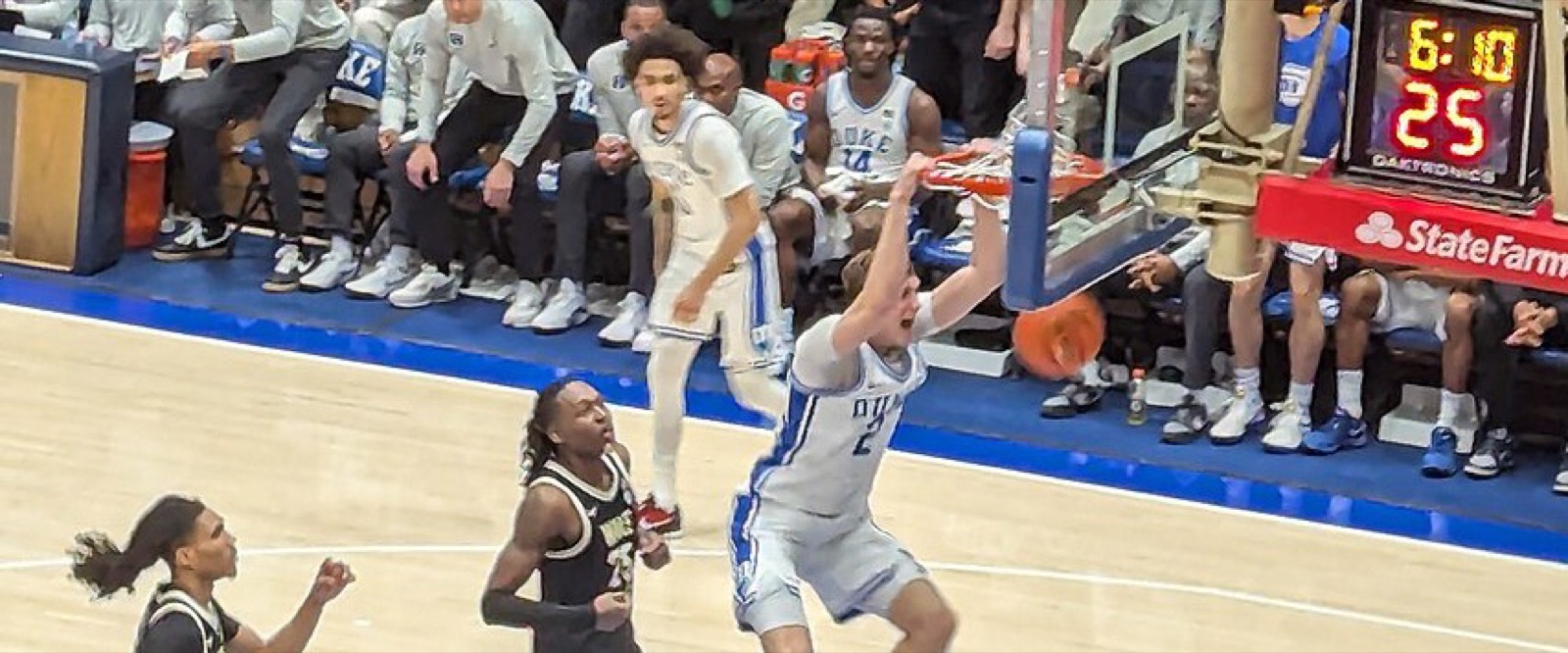
The most productive and most efficient of the top three picks: 22.5 points, 10.5 rebounds, 4.1 assists and 65.3% True Shooting at Duke. He’s the most ready player in the class, which is why his curve is flat. His ceiling will depend on his ability to defend and finish at the rim against players bigger than him.
Caleb Wilson and Keaton Wagler: 76 and 72 at ten years
Wilson (Chicago, 4th pick) is explosive and productive, 19.8 points and 9.4 rebounds at North Carolina, but still raw as a shooter and creator. Wagler (Clippers, 5th) is the opposite: less athletic, but the best decision-maker with the ball after the top 4, according to ESPN’s Jeremy Woo. Both have wide ranges.
On the French side, no player went in the first round. The only French player in the 2026 draft is Narcisse Ngoy, from Poitiers, taken 57th.
Both classes combined
At ten years, our ranking mixes both classes: Flagg, Harper, Dybantsa, then Bailey and Peterson tied. In June, ESPN’s Jeremy Woo did the same exercise with a different method, a scout’s. The two rankings agree on No. 1. They differ on two names.
| Rank | Off-Ball (10 years) | ESPN (June 2026) |
|---|---|---|
| 1 | Flagg | Flagg |
| 2 | Harper | Dybantsa |
| 3 | Dybantsa | Peterson |
| 4 | Bailey, Peterson | Boozer |
| 5 | – | Harper |
| 6 | Wilson, Edgecombe | Wilson |
Harper higher: we give him the best context grade in the table, his Finals convinced us, and his start to the season (18 points a game as a starter) hasn’t changed our minds. Boozer lower: we see him as very good right away, but with less room to grow than the others. That’s exactly the kind of disagreement we’ll be able to settle in a few years.
Harper is averaging 17.3 points, starting for an 11-2 team. Dybantsa debuted on October 28 and is at 15 points over nine games, with 48.5% True Shooting (58.1% for Harper): our Harper-over-Dybantsa call is holding, for now.
Flagg is at 24.6 points, 6.9 rebounds and 6.5 assists, with a 43-point game against Indiana. Among the rookies, the surprise is Darius Acuff Jr. (25.4 points, 7.2 assists), whom we hadn’t ranked. Boozer (15.6 points, 9.8 rebounds, a triple-double) is holding up against NBA bigs better than expected.
Bad news for Wilson (18.9 points): a broken hand trying to strip the ball from Wembanyama, four to six weeks out. Peterson (17.2 points, five straight games with 20 or more) and Bailey (13.9) are improving. Knueppel hurt his hamstring again after just one game. It’s still too early to revise a ten-year projection: we’re keeping our grades, see you in April.
Flagg on a winning team. Harper with more minutes. Bailey over a full season. Peterson healthy. Boozer against NBA bigs. We’ll redo the rankings in April, and publish the gap between our projections and reality.
See you in 2036
If we had to bet on a single name, it would be Flagg, and that’s not a very brave bet. The real bet is the order behind him: Harper ahead of Dybantsa, Bailey catching the top 2026 picks, Boozer plateauing. The 2023 class taught us that much of a lottery is decided after the draft. We wrote these lines so they can be thrown back at us in ten years.
Sources
- 2025-26 Rookie of the Year and MVP voting: Basketball-Reference · Flagg and Knueppel: Bleacher Report
- All-Rookie teams: NBA.com · Edgecombe: PhillyVoice · Bailey: ABC4 Utah · Raynaud: NBC Sports California · Harper: Inquirer
- Start of the 2026-27 season (Acuff, Boozer, Wilson’s injury): NBA.com, NBA.com, NBA.com, ESPN box scores
- Flagg’s injury: CBS Sports, Basketnews
- 2026 draft: Wikipedia, NBC Sports · College stats and combined ranking: ESPN, Jeremy Woo · Dybantsa: BYU
- The 2023 draft, three years later: NBA Draft on SI · Wembanyama, Defensive Player of the Year: CBS Sports · Coulibaly: Land of Basketball