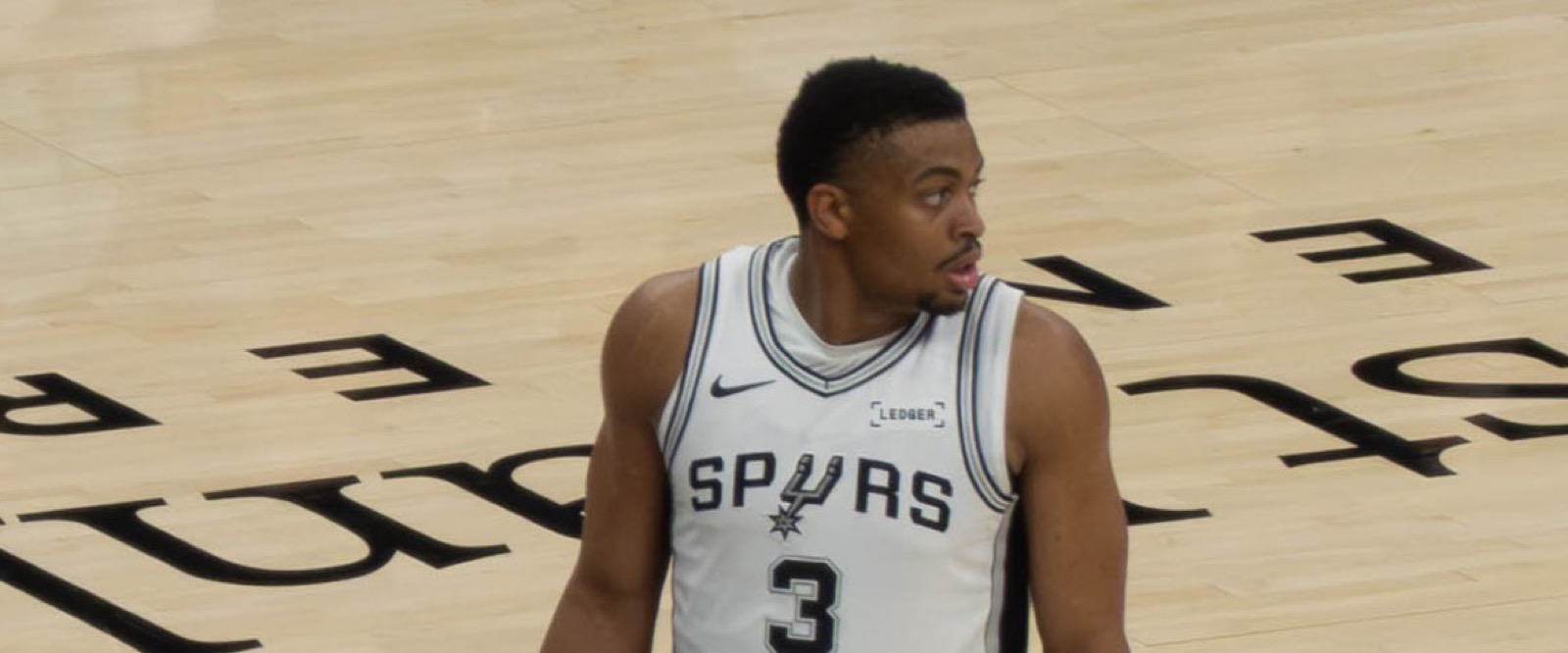
On April 22, 2026, the NBA handed the Sixth Man of the Year award to the Spurs’ Keldon Johnson, ahead of Miami’s Jaime Jaquez Jr. and Denver’s Tim Hardaway Jr. Nothing surprising at first glance: every year, the award goes to the league’s best backup.
What’s more surprising is how he did it.
- 82games played, every one off the bench
- 1,081points scored as a reserve, a Spurs record
- 2008the Spurs’ last Sixth Man of the Year: Manu Ginóbili
A full-time reserve
Johnson played all 82 regular-season games, every one off the bench. According to the NBA, he’s only the second player of the last decade to do so. He was also the first Spur to score more than 1,000 points off the bench in a season.
That number says a lot. The sixth man is supposed to be a position. In practice, most of a season’s backups are starters temporarily moved down, or players who switch depending on injuries and opponents. A player who agrees to come off the bench from the first night to the last, knowing he could start elsewhere, has become the exception.
A question of ego
Johnson said it himself: he was a starter “for a long time”. Accepting a bench role, in his words, was a matter of controlling his ego, to put the team first. A rare quality, in the NBA as in team meetings. San Antonio spent the whole season turning him into a character, billed as the best backup in the league.
That isn’t trivial. In a league where contracts, stats and visibility depend largely on minutes and starter status, asking an established player to stay on the bench means asking him to give up part of his market value.
What the award used to reward
Fifteen years or so ago, the typical sixth man was a scorer. Jamal Crawford and Lou Williams each won the award three times with the same profile: come in, take shots, change the tempo of a game. The 2025-26 podium keeps a bit of that tradition, with Hardaway, the best three-point shooter among reserves (205 made).
But Johnson and Jaquez look like something else: complete players, able to defend, rebound and sustain long stretches at high intensity. The sixth man is no longer just the scorer. He’s the one who lets the starters rest without the team dropping off.
Really a dying trade?
The title of this feature is a provocation, and it’s half true. The award isn’t going away, and there will always be a best backup to vote for. What’s disappearing is the career sixth man, the player who builds a whole career in the role, as Ginóbili did in San Antonio.
The paradox is that the team that did best this season with a true sixth man is Ginóbili’s own. The Spurs reached the Finals with Johnson on the bench, and with a rookie, Dylan Harper, who learned the job behind De’Aaron Fox and Stephon Castle. Maybe the Spurs’ culture is the last one that knows how to convince a good player to sit at tip-off.
Dylan Harper is one of the rookies we projected ten years out. The rookies in ten years
Sources
- 2025-26 Sixth Man of the Year: NBA.com, NBA Communications
- Voting results: NBA Communications